

Does cancer screening increase lifespan?
Some analysis using Scholara.ai

I always found this study fascinating. It asks a simple question: is there any evidence that cancer screening increases lifespan? It does that by looking at the randomized trials that have been done — screening vs. no screening — that report overall survival (also known as all-cause mortality — preventing death when all causes are considered).
The study — a systematic review and meta-analysis — was done in 2022, so I thought it was ready for an update! I ran the update today, from scratch, using the systematic review platform I built with other doctors and AI engineers (scholara.ai).
My new analysis included 22 randomized trials, with a total of 2,705,711 participants across 8 screening tests. Here’s what I found:
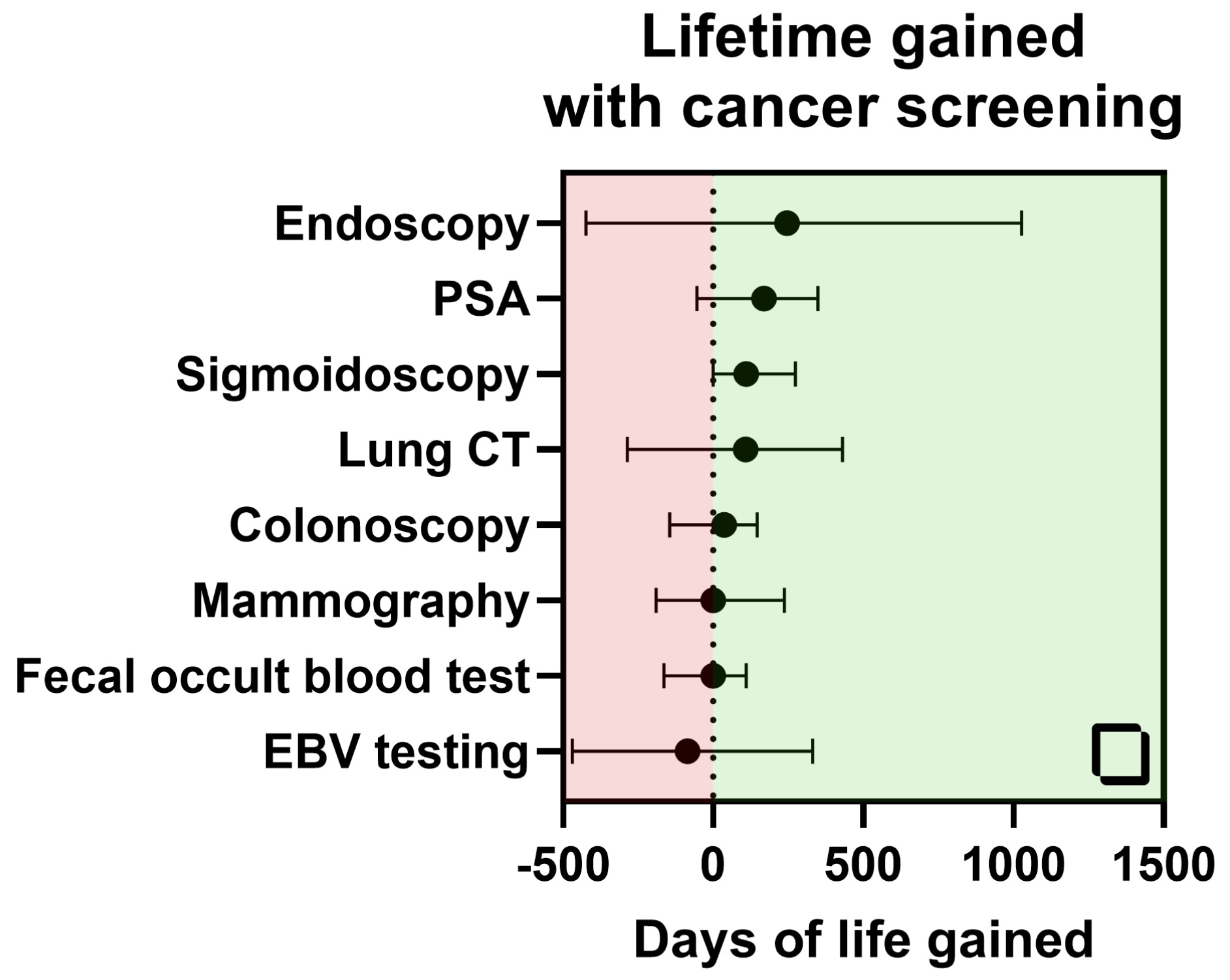
This means the only screening test with evidence (from randomized trials) of increased lifespan is sigmoidoscopy, with an average boost of 110 days.
I find this interesting for three reasons:
This analysis captures net impact: potential for increased lifespan (by finding cancers earlier) but also potential for life years lost (due to complications of screening or its follow-up).
The negative findings are at least partly a fault of the primary trials: it’s known that detecting improvement in overall survival with cancer screening requires huge populations or long follow-up times (though the synthesis/meta-analysis approach taken here should help with that).
One reason screening might not extend overall survival is because people die from other causes first — like heart disease. Progress in these other areas could start to reveal the overall survival benefit — especially given the evidence that most of these tests do reduce cancer-specific mortality.
The original analysis took ~weeks-months — mine took about 2 hours. You can try our platform for free here.
¹If you’re interested in the included trials, they are as follows:
Endoscopy (for early detection of esophageal cancer in people with Barrett’s esophagus): 1
PSA (for early detection of prostate cancer): 2, 3, 4, 5, 6
Sigmoidoscopy (for early detection of colorectal cancer): 7, 8, 9, 10, 11
Low dose lung CT (for early detection of lung cancer in smokers): 12, 13, 14
Colonoscopy (for early detection of colorectal cancer): 15
Mammography (for early detection of breast cancer): 16, 17
Fecal occult blood test (for early detection of colorectal cancer): 18, 19, 20, 21
EBV testing (for early detection of nasopharyngeal carcinoma): 22
As a radiologist, I’m not surprised that screening mammography does not extend lifespan. False negatives in dense breasts probably contribute to lack of life span extension. We only use single readers. We need double readers. AI would likely help increase the yield. Lastly, MRI is better than mammography in dense breasts.