

Salivary miRNA testing accurately diagnoses endometriosis
Endometriosis is hard to diagnose, a salivary miRNA test developed by the French company Ziwig might change this.

Of the list of common clinical entities, one has always jumped out to me in terms of vagueness: endometriosis. I’m not ashamed to state that I’ve never been entirely comfortable in regards to when to suspect and how to approach this disease. A new diagnostic test might change how we approach this disease all together.
Endometriosis is caused by ectopic endometrial tissue growths. These can grow and shrink in response to hormonal cues and cause local inflammation. They can cause a whole range of symptoms, but most common is pain.
This disease is common: somewhere between 5% and 10% of women have endometriosis. It doesn’t only affect young women: 5% of cases are diagnosed in women past their menopause! The range of possible clinical presentations, from abdominal pain and hematuria to reccuring pneumothoraces and limb pain (really, here’s a case report of wrist endometriosis) further complicates things.
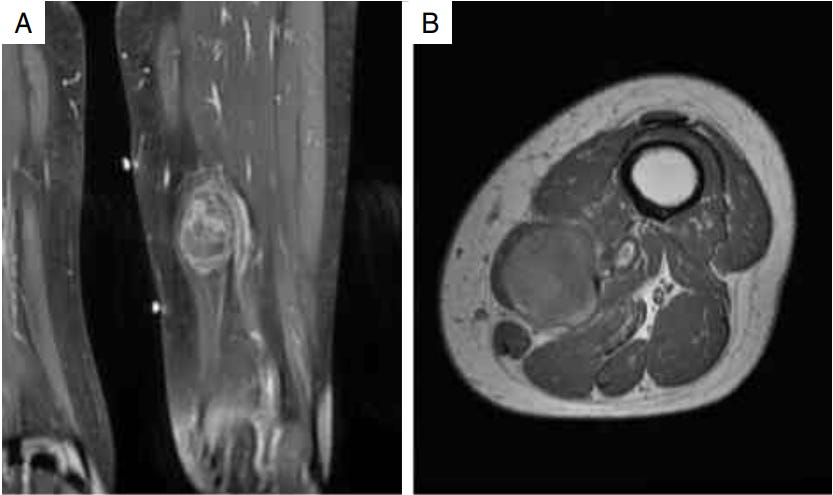
Diagnosing endometriosis is hard. A CT scan may only shows specific complications such as ureteric obstruction or a pneumothorax - which in itself have a broad differential diagnosis. Ultrasound and MRI have a higher sensitivity, depending on the localisation of endometriosis lesions. Published figures range around 75-90%.
A diagnostic laparoscopy, inflating the abdominal cavity and inserting a camera combined with biopsy taking is essentially the only way to diagnose endometriosis with certainty. Obviously, this is not an acceptable diagnostic “test” for most patients.
A new diagnostic test for endometriosis
It is clear that there is an unmet need in endometriosis care, starting with the diagnosis. This is the exact problem a French company tackled. They conducted a large study assessing the value of certain salivary miRNA targets in diagnosing endometriosis and got published in the New England Journal of Medicine.
You read that right: salivary RNA diagnoses a gynaecological disease. As it turns out, salivary miRNA’s kind off mirror the blood miRNA profile - a 2018 study found that 90% of salivary miRNA were also detected in blood samples. Added benefits to testing saliva is the non-invasive nature compared to blood draws. Additionally, coagulation, hemolysis and white blood cells appear to affect the miRNA content of blood draws - further complicating miRNA analysis on blood draws.
In the recently published study, the panel consisting of 109 miRNAs, defined in a 2022 study, diagnoses endometriosis with remarkable accuracy. With surgical confirmation as the gold standard, over 95% of patients were correctly classified as having endometriosis or not. Using only ultrasound and/or MRI scans, 27% of patients were misdiagnosed. In complex cases, almost 40% of patients were misdiagnosed using conventional imaging, whereas the miRNA test retained accuracy!
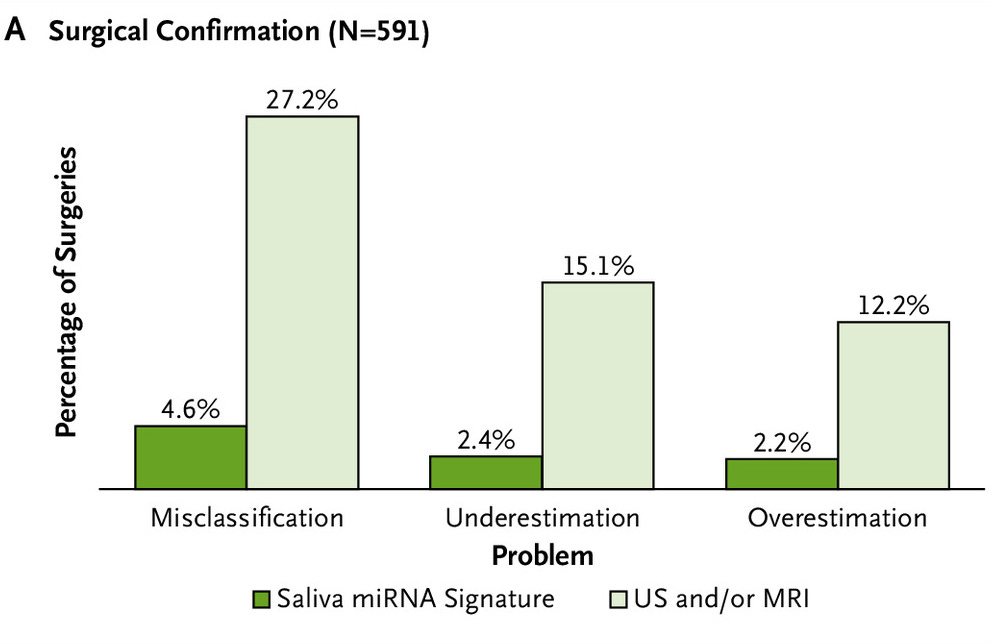
This result is incredible. Further analyses show a sensitivity and specificity of approximately 95% for the miRNA test, compared to respectively 76% and 68% for conventional imaging. Ideally, we’d have real-world data to confirm, but these data are already encouraging to use this test in clinical practice. Endometriosis has a diagnostic delay of approximately 10 years - this test might change that.
