This week in medicine
A hit to the inflammation theory of cardiovascular disease, a non-opioid painkiller, progress for vitiligo, and more.

Welcome! Every week I find and analyze the most important stories from across medicine — trials, papers, approvals. Let’s go!
This post is sponsored by Consensus, the AI agent that helps me with research for these pieces. Consensus now has >2.5 million monthly users. If you’re a doctor, try Medical Mode to query guidelines and the top medical journals. If you’re doing research, Consensus has access to 220 million peer-reviewed papers, and has deals with 6 top publishers to access full texts (even behind paywalls). You can use my link for a free trial!

1. Blocking chronic inflammation (via IL6 inhibition) did not prevent cardiovascular events
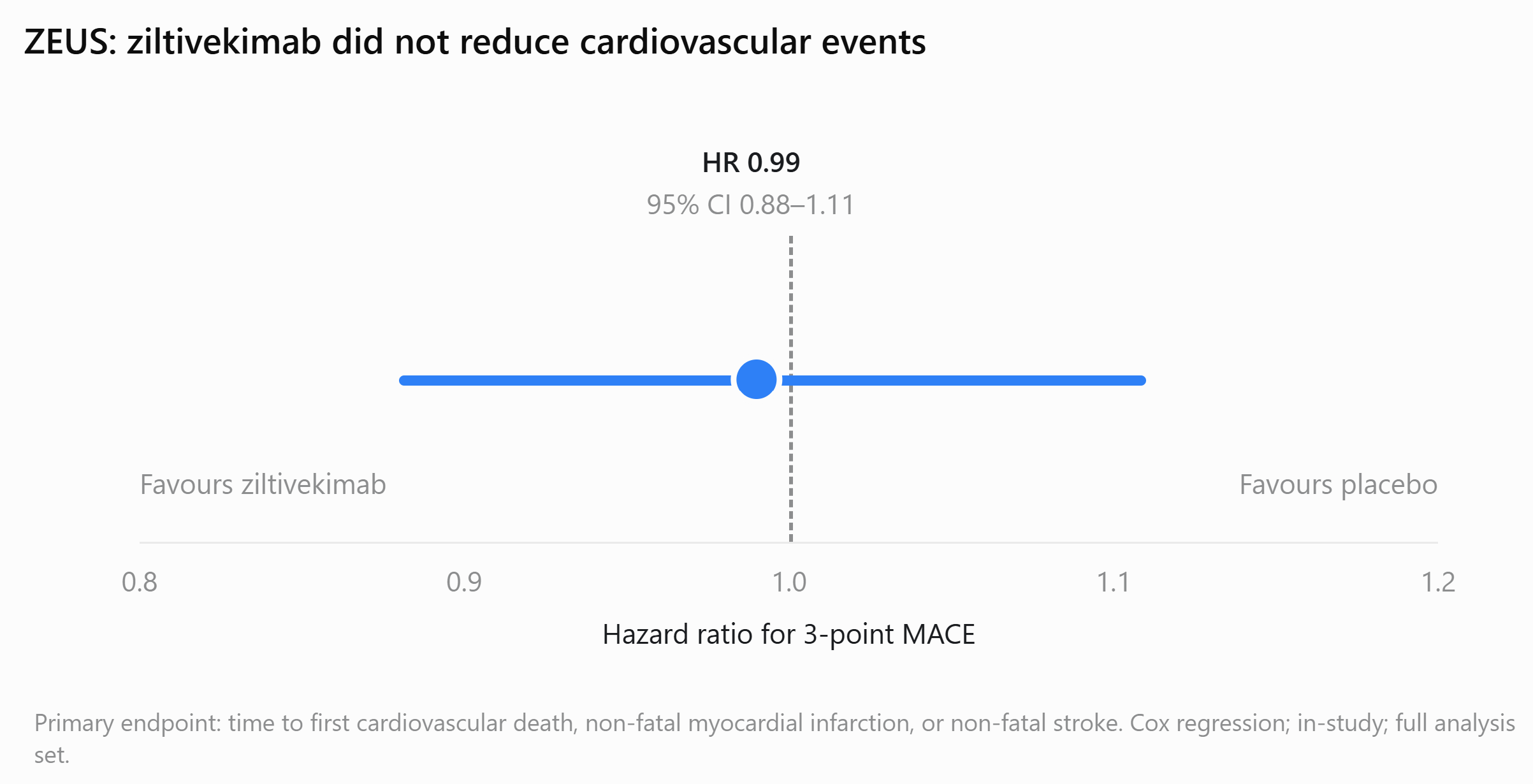
The inflammation hypothesis of atherosclerosis — that chronic, low-level inflammation is an independent, targetable risk factor for cardiovascular disease — has actually been proven before: here, with colchicine and here, with IL1 blockade. Colchicine is now approved for this indication, though its use isn’t widespread, and IL1 blockade was never approved. Novo Nordisk tried a different approach: IL6 inhibition, in people with atherosclerotic cardiovascular disease, chronic kidney disease and inflammation (high levels of hsCRP).
The trial was huge: 6,300 people, and IL6 blockade had absolutely no effect on cardiovascular events. And it caused more serious infections too — yikes. This is a big hit to the thesis, but Novo has two other trials ongoing with IL6 blockade (one in patients with heart failure, the other in patients hospitalized with myocardial infarction) and inhibition of the pathway upstream — by hitting NLRP3, a constituent of the inflammasome — is being tested by many teams, too.
2. A non-opioid painkiller
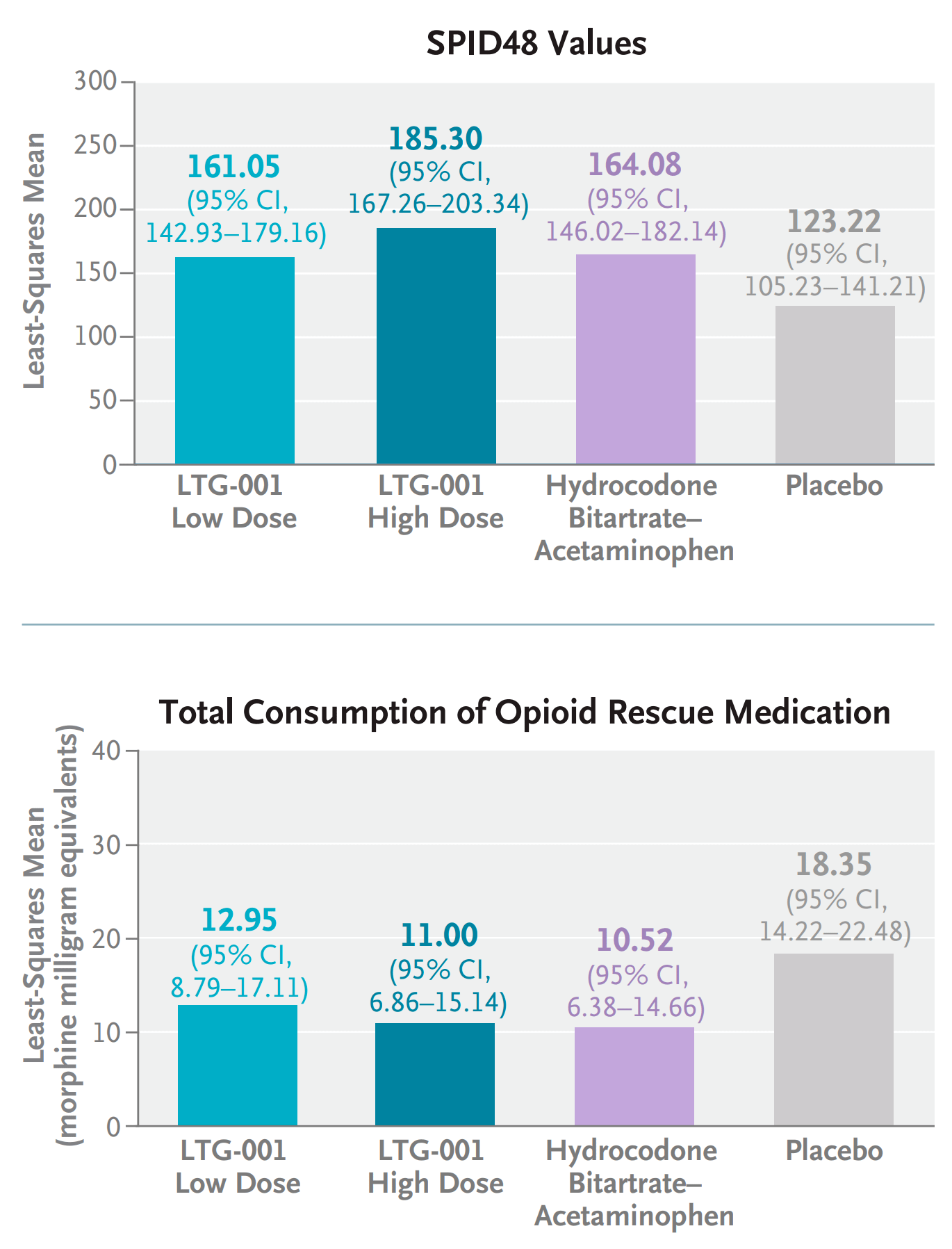
Latigo Biotherapeutics published data for their new non-opioid painkiller — an oral inhibitor of the pain-sensing sodium ion channel, NaV1.8, which showed opioid-level — or better — pain relief. It reduced postoperative pain in a phase 2b trial, and reduced the need for opioid rescue medicines. At the high dose, it was about 50% better for pain relief than the hydrocodone/acetaminophen control used.
This drug (LTG-001) binds the NaV1.8 channel in a different way to today’s only approved NaV1.8 inhibitor (Vertex’s suzetrigine) — it’s designed specifically for higher potency and better penetration into peripheral nerves. Next up, phase 3.
3. Two steps forward for vitiligo
First, Pfizer’s oral JAK3/TEC inhibitor, ritlecitinib, met its endpoints in vitiligo (where the immune system destroys the pigment-producing melanocytes in skin).
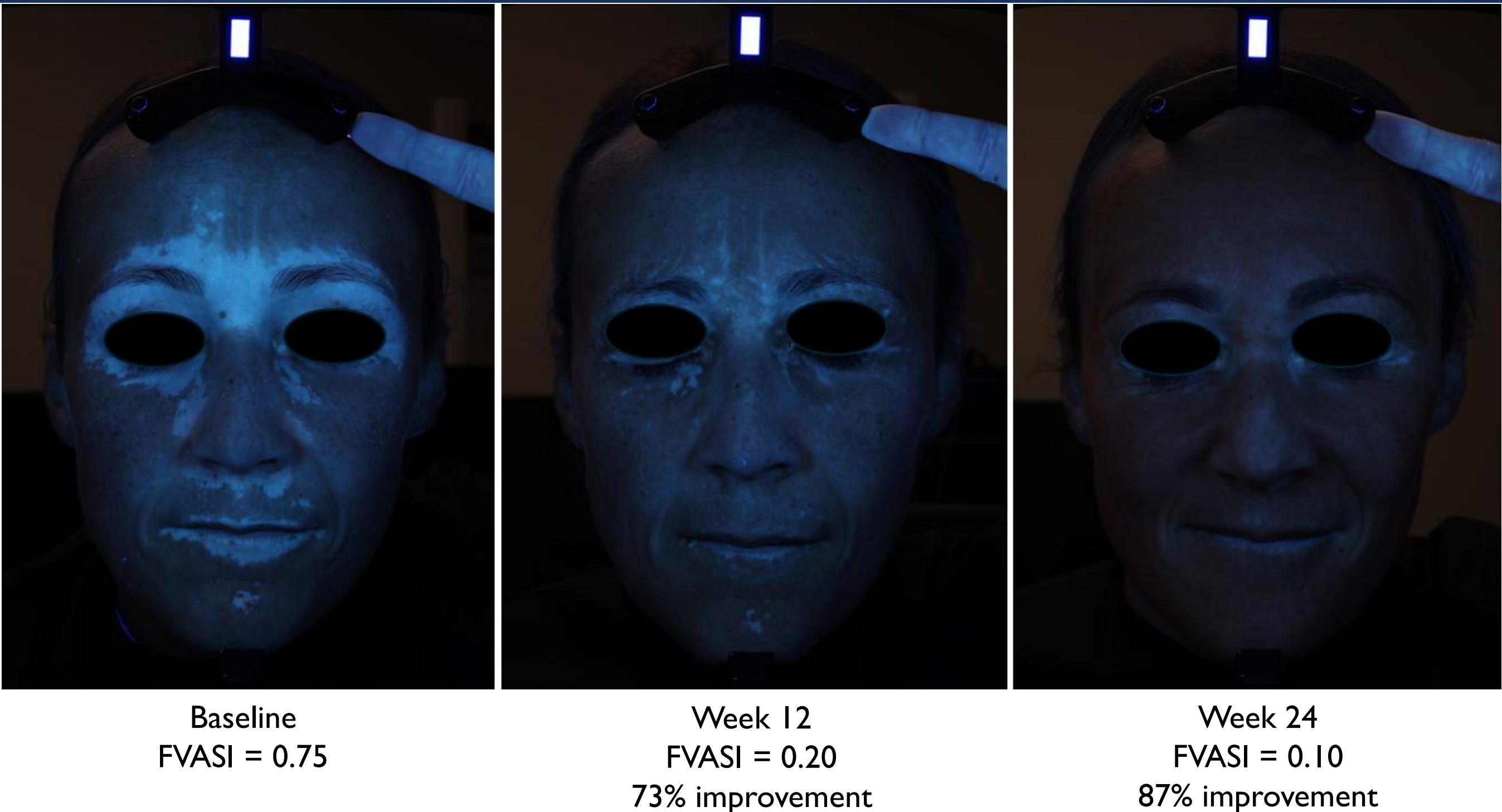
Second, Argenx agreed to acquire Forte biosciences. Their drug is a first-in-class antibody against CD122, the subunit shared by IL2 and IL15 — so it inhibits T cells and NK cells (but spares T-regs). In vitiligo, it can re-pigment the skin:
4. A GLP-1/glucagon agonist helps treat alcohol use disorder
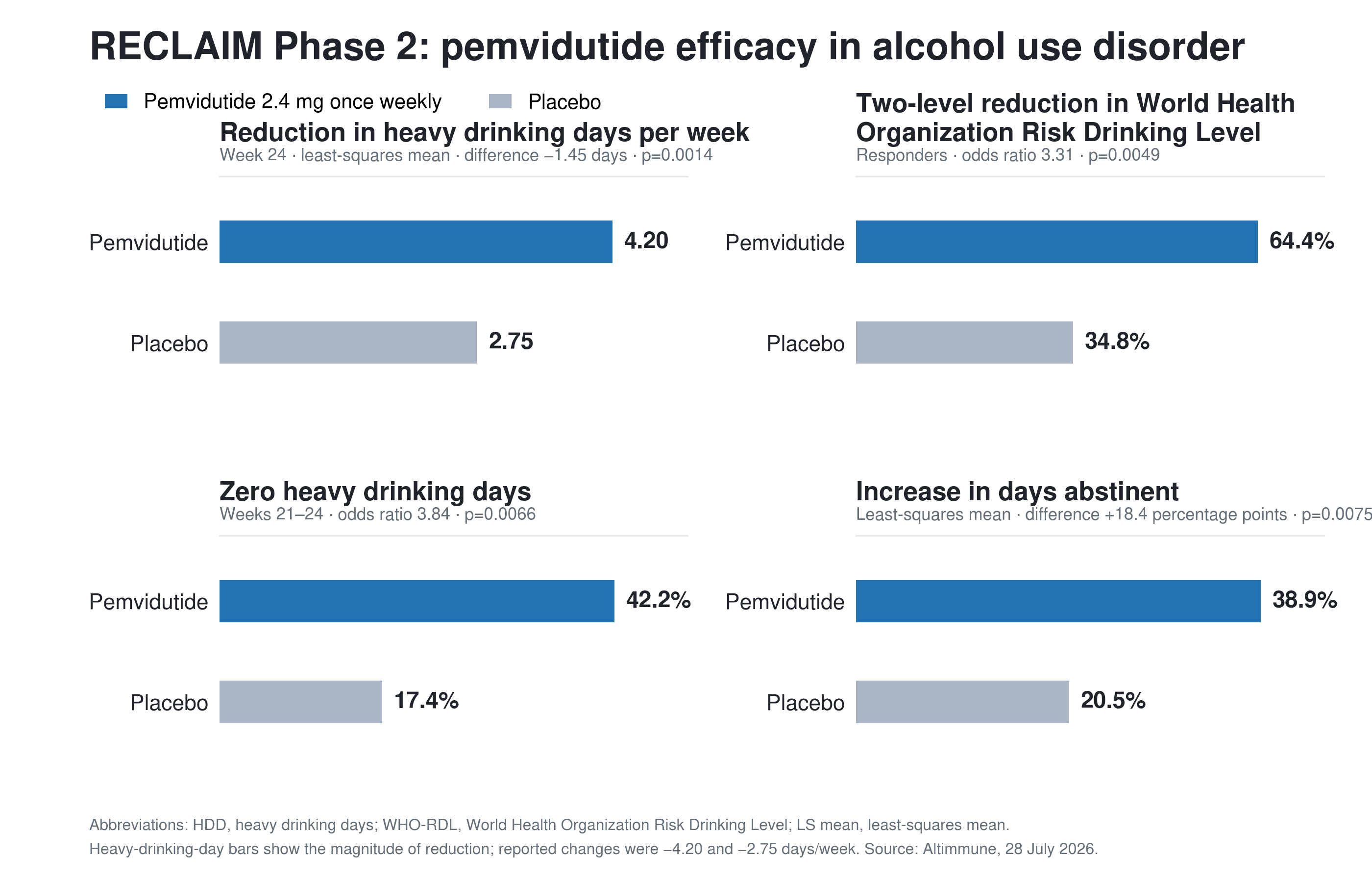
In a phase 2 trial, Altimmune’s GLP-1/glucagon receptor co-agonist, pemvidutide, reduced heavy-drinking days and increased abstinence in patients with alcohol use disorder. This adds to the trial data that shows semaglutide reduces alcohol consumption, and to the developing body of evidence that GLP1s could help treat addiction.