

One treatment, many cures
5 breakthroughs in medicine this week

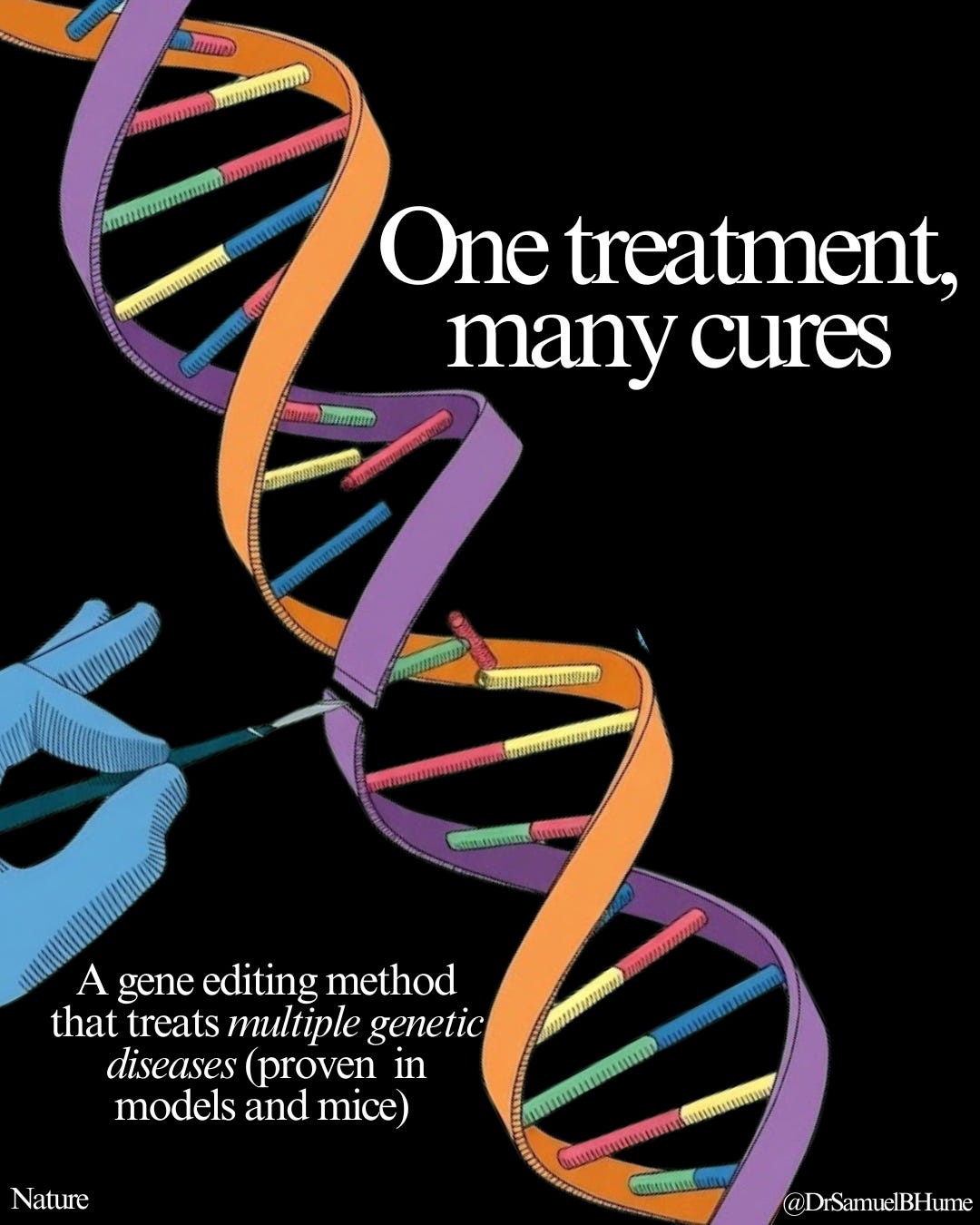
1. Disease-agnostic genome editing
David Liu’s work at Harvard has led to a series of breakthroughs this year, topped by the personalised gene editing of baby KJ.
Genetic conditions are individually rare, but collectively common: there are about 8,000 genetic diseases, and together they affect 300,000,000 people. What if one therapy could cure multiple conditions?
In this study, Liu’s team focussed on genetic conditions caused by early stop codons. Normally, when the ribosome reaches a stop codon, there’s no matching tRNA; instead, ‘release factors’ bind and terminate protein synthesis.
Here, a gene encoding a redundant tRNA was edited to recognise a stop codon, letting it compete with release factors and insert an amino acid (leucine) instead of terminating translation. It works like this:
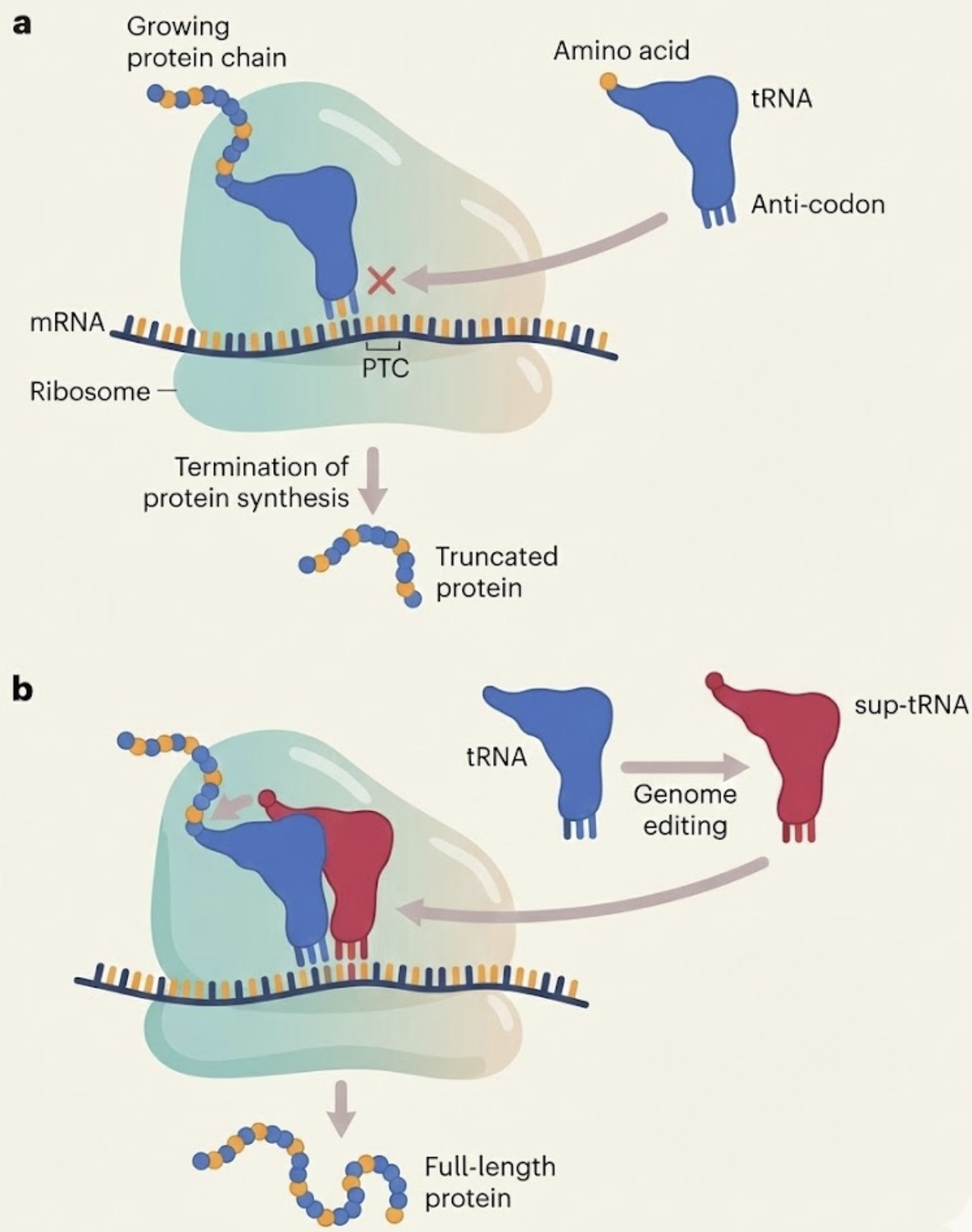
This means the new protein is not strictly wildtype, but it does produce a near-wildtype protein that has substantial — therapeutic — function.
The concept was proven in multiple models of disease that can be caused by premature stop codons: Batten disease, Tay–Sachs disease, Niemann–Pick C1, Cystic fibrosis — and in a mouse model of Hurler syndrome.
The work hinges on prime editing, a technique that’s already at the centre of a company: Prime Medicine.
2. Insulin as a cream
About 150,000,000 people with diabetes are dependent on daily insulin. Insulin’s a large, water-soluble protein, so it can’t pass through the skin barrier: it needs to be injected.
We do have insulin pump systems, where a small needle sits under the skin and delivers insulin directly into subcutaneous tissue. But what if it were possible to take insulin as a cream?
This study, in this week’s Nature, hooked the insulin protein to a skin-permeable polymer that lets it hop across the skin barriers and into the blood, lowering glucose levels in animal diabetes models.
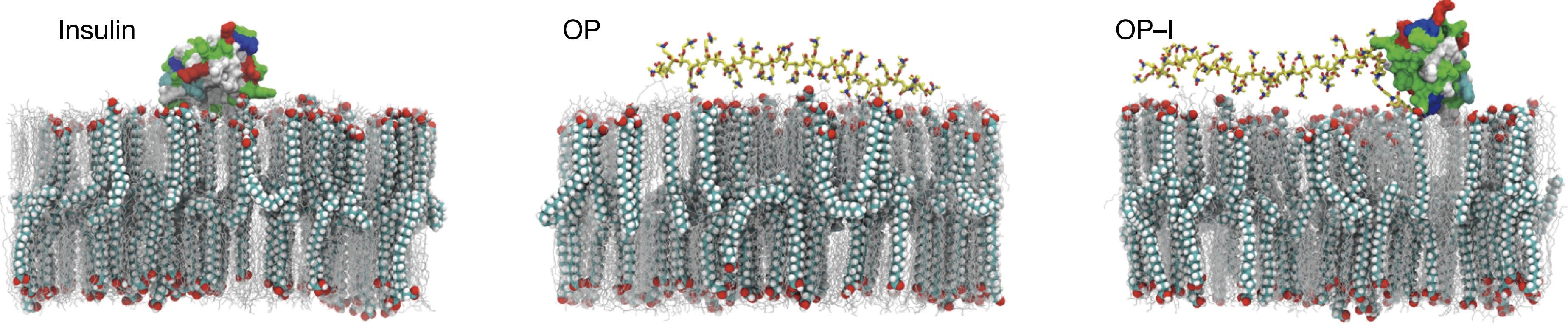
This adds to other insulin breakthroughs from this year, including a self-regulating insulin that turns itself off when glucose is low.
3. A promising pre-clinical Alzheimer’s candidate
The leading theory for Alzheimer’s is a cascade, initiated by processing of the amyloid precursor protein. There are two paths this can take:
A protective path triggered by α-secretase, that produces a soluble product
A harmful path, triggered by β-secretase, that gives rise to the plaque-forming amyloid-β.
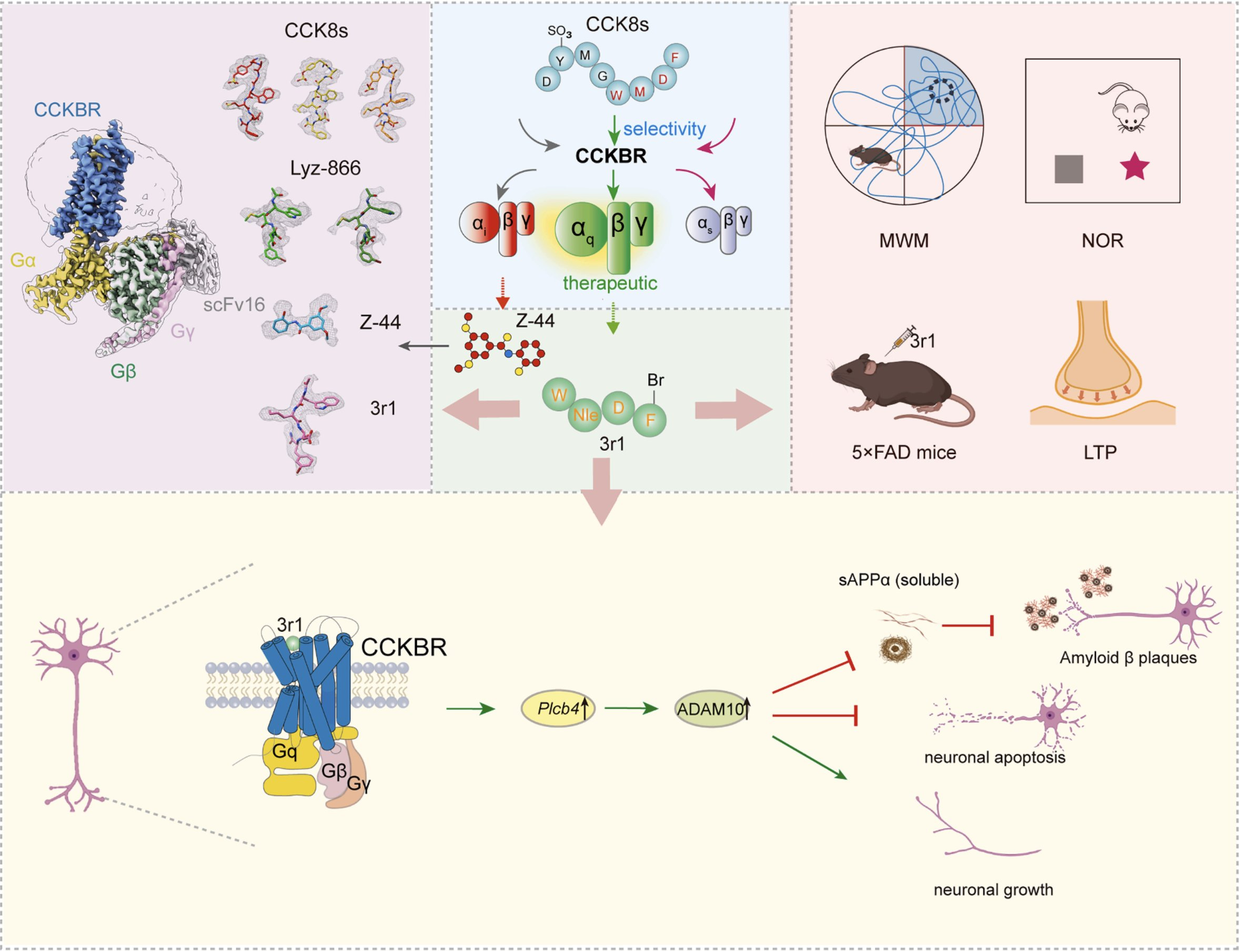
What if we could push cells down the protective path — at the cost of the harmful path? That’s what this modified, 4 amino acid peptide tries to do.
It’s an agonist of a receptor called CCKBR — in mice, it’s able to pass the blood-brain-barrier and shunt processing of amyloid precursor protein down the protective path by stimulating α-secretase.
This means less amyloid-β plaque is produced, and learning and memory (in Alzheimer’s mouse models) are rescued.
4. The end of carotid surgery for patients without symptoms…?
There are a few nailed-on interventions that prevent stroke: lowering blood pressure, lowering cholesterol, stopping smoking, treating diabetes, treating atrial fibrillation, and carotid surgery… right?
Carotid surgery (carotid endarterectomy) involves opening up the carotid artery to scoop out atherosclerotic gunk — and then stitching it back up. These two trials enrolled patients where the carotid lumen has narrowed by ≥70%, who have not had a recent stroke or transient ischaemic attack.
Trial 1: Best medical therapy (statins, antihypertensives etc) vs. best medical therapy + stenting (by an interventional radiologist).
Trial 2: Best medical therapy vs. best medical therapy + carotid surgery (by a vascular surgeon).
