

This week in medicine
A new obesity target, a better way to discover new cancer drug targets, pyroptosis inhibitors for sepsis, an orexin agonist for narcolepsy, and more.

Welcome! Every week I find and analyze the most important stories from across medicine — trials, papers and approvals. Let’s go!
This post is sponsored by Consensus, the AI agent that helps me with the research for these articles. Consensus now has >2.5 million monthly users. If you’re a doctor, try Medical Mode to query guidelines and the top medical journals. If you’re doing research, Consensus has access to 220 million peer-reviewed papers, and has deals with 6 top publishers to access full texts (even behind paywalls). You can use my link for a free trial!

1. A new drug target for metabolic syndrome
I actually thought we’d exhausted our discovery of targets for metabolic syndrome, but researchers from the Regeneron Genetics Center this week have proved me — happily — wrong.
They found a new target: FNIP1 (folliculin-interacting protein 1). People carrying loss-of-function FNIP1 variants have lower triglycerides, lower liver fat, better glycaemic control and less visceral fat — plus a much lower risk of coronary artery disease, type 2 diabetes, metabolic liver disease or cirrhosis.
They used the ratio of triglycerides: HDL as a biomarker to make this discovery. Such a continuous biomarker gives a measurable number for every person in the study (unlike a binary marker like cardiovascular events), which gives much more statistical power. This has actually been done before, in a study of 170,000 people, but loss of function FNIP1 variants are extremely rare. They occur in only about 1 in 7,000 people, so a huge dataset was needed, which Regeneron built from 1,032,116 people in America, Europe and Asia, complete with exome sequencing and blood samples, and annotated with clinical data (like diabetes diagnoses).
An siRNA might be the best route to target FNIP1 — and it’ll need to be liver-targeted (GalNAc-conjugated) because systemic loss of FNIP1 causes immunodeficiency and heart problems. I checked the Regeneron pipeline, by the way, and they do not seem to have this in trials yet — so if you’re quick you can beat them to it!
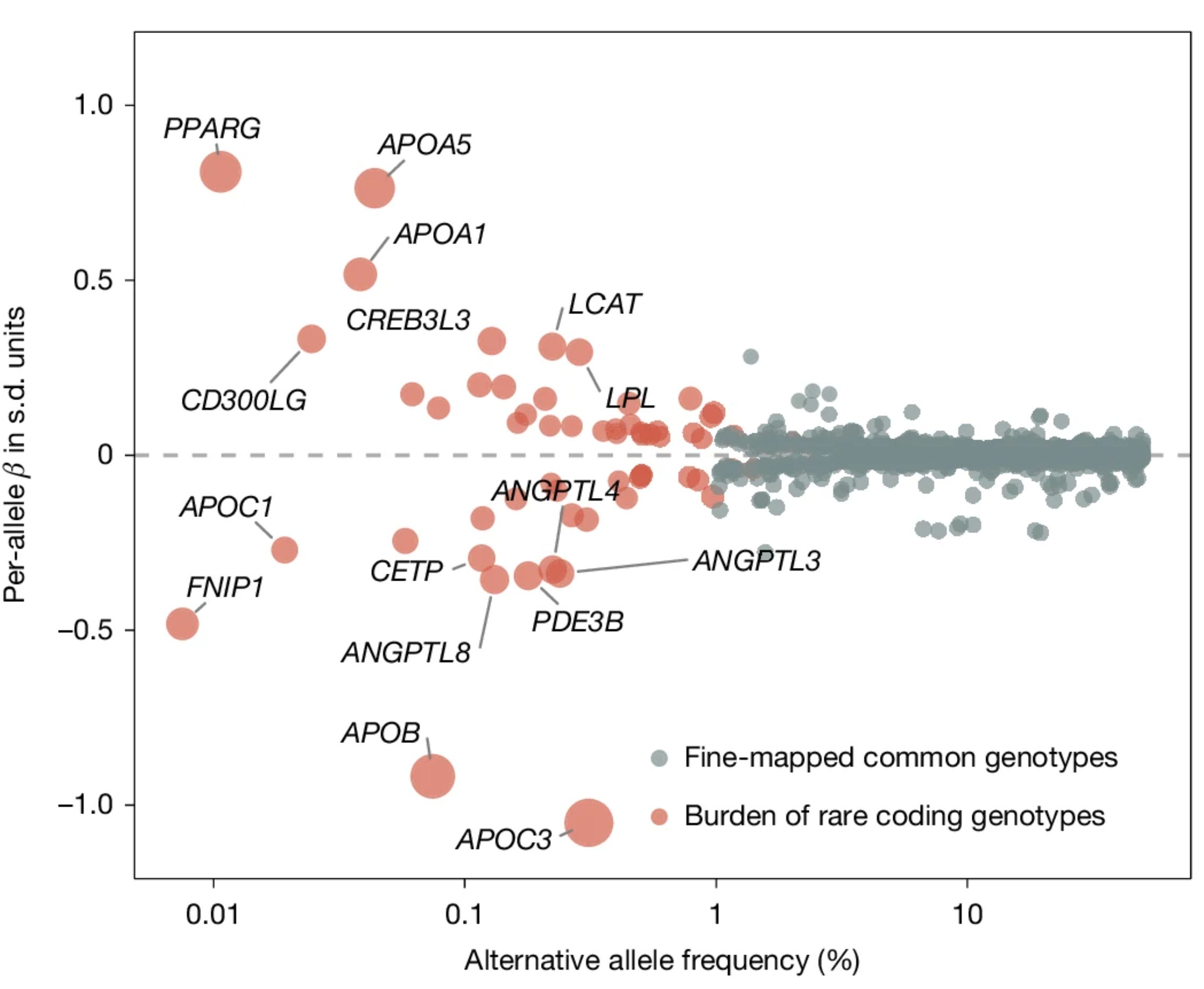
Source: Regeneron Genetics Center in Nature.
2. The first medicine that targets the underlying biological cause in narcolepsy
The sleep disorder, narcolepsy type 1, is caused by the loss of neurons that produce the neuropeptide, orexin. There are a few drugs approved here (modafinil, solriamfetol, pitolisant, oxybates) all of which boost wakefulness but none of which target orexin.
Takeda’s oveporexton — an orexin receptor agonist — was FDA-approved this week; in trials, it reduced daytime sleepiness, cataplexy, sleep paralysis and hallucinations, and improved night-time sleep. It seemed to improve cognition and function, too. The main side-effect? Insomnia.
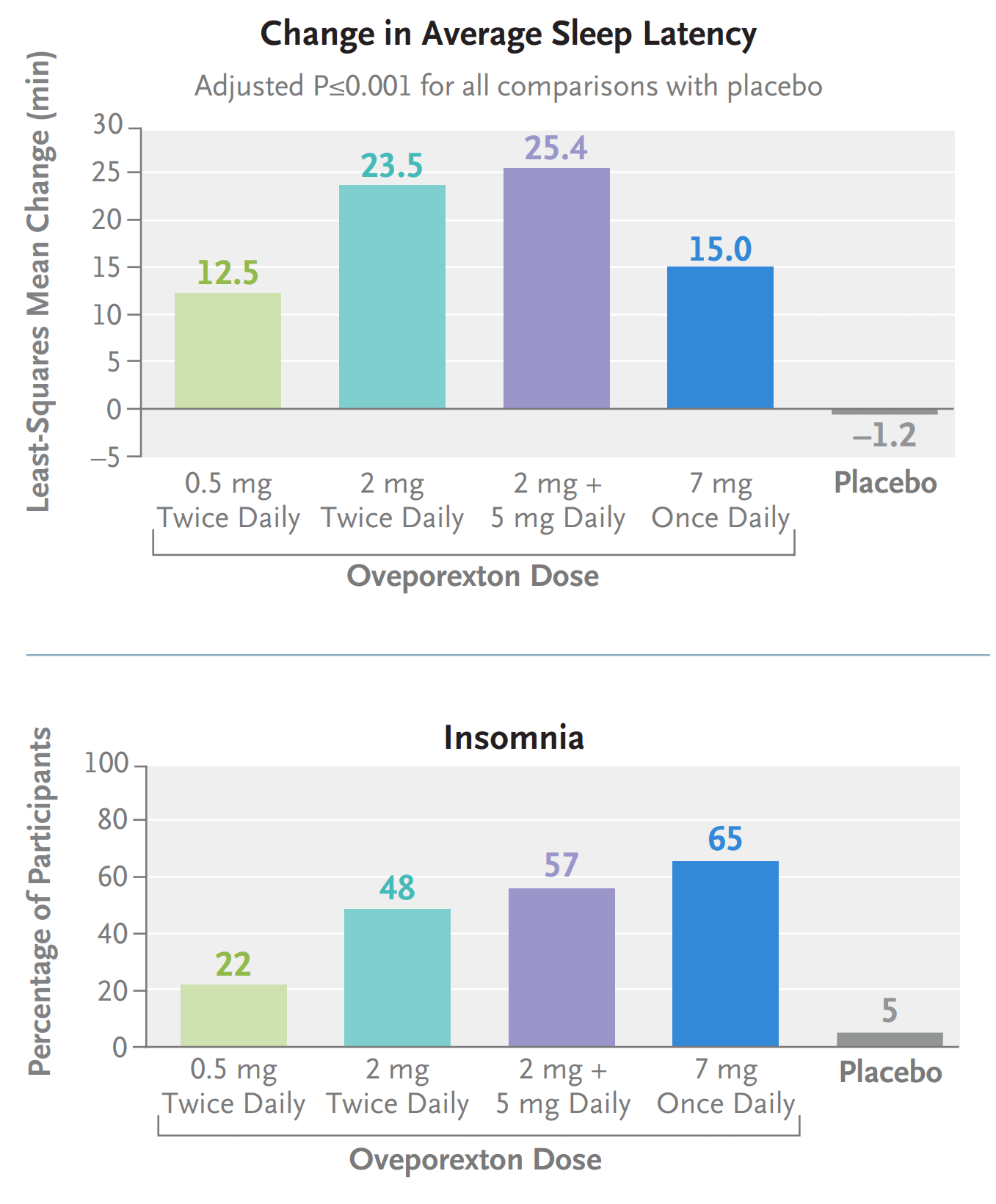
Source: Takeda in NEJM and FDA.
3. Eli Lilly starts a GLP1 trial in irritable bowel syndrome
Lilly provided an update to their pipeline this week, with a new indication for brenipatide: irritable bowel syndrome (IBS). Brenipatide is Lilly’s dual GLP1/GIP agonist, being investigated mainly for addiction/psychiatric conditions (rather than obesity/metabolic conditions). They’re also testing it in depression, alcohol use disorder, opioid use disorder, bipolar disorder, smoking cessation, and schizophrenia.
IBS is a gut-brain disorder caused partly by visceral hypersensitivity (hypersensitivity of the nerves supplying the gut). Lilly are trialling brenipatide in both subtypes of IBS: IBS-D, where diarrhoea is the main symptom, and IBS-C, where constipation is the main symptom.
I think this is interesting because the main side-effects of GLP1s are also the symptoms of IBS (constipation and diarrhoea) — but there are actually some anecdotal reports that GLP1s help in IBS and some trial data, too.
Lilly have only said that brenipatide has “optimal properties for neuroscience indications” — so the reason behind this focus for brenipatide isn’t clear yet.

Source: Lilly Q2 earnings deck.
4. Targeting RAS G12D with combination therapy in lung cancer
The current standard of care for first-line advanced non-small-cell lung cancer is pembrolizumab and chemotherapy, which reaches an objective response rate (ORR) of ~48%. About 2–5% of these cancers is driven by the KRAS G12D mutation, for which we currently have no targeted therapy.
Revolution Medicines presented new data for zoldonrasib this week — their oral inhibitor of active KRAS G12D — combined with pembrolizumab and chemotherapy.
In a small group of 28 patients, the ORR was 82%, with a quite beautiful waterfall plot, and ~little extra toxicity beyond the chemotherapy–immunotherapy backbone. These data come from a phase 1/2 trial, so it’s still early, but represents a response rate substantially higher than the current precedent, by targeting a specific biomarker.
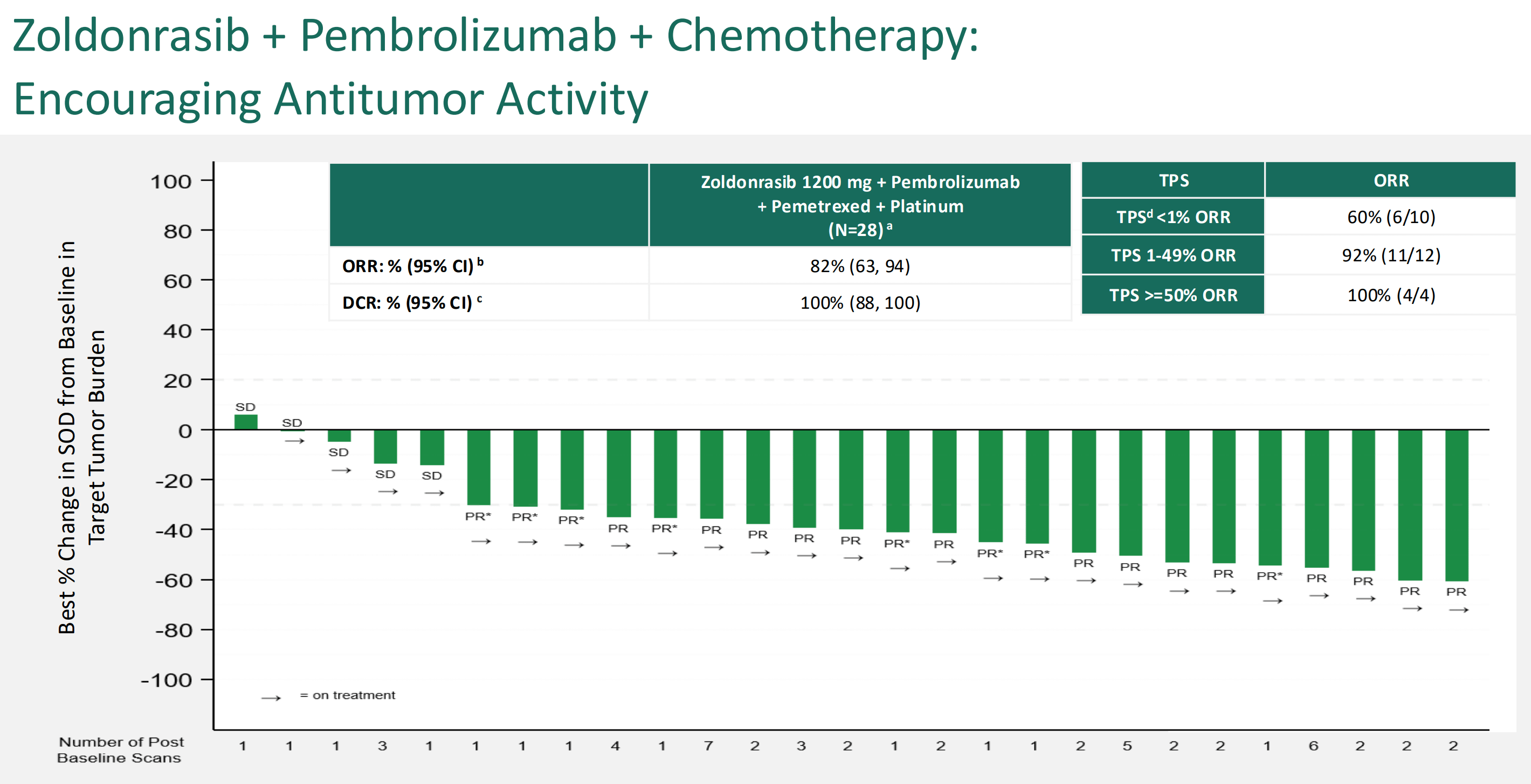
Source: Revolution Medicines’ August 2026 corporate presentation.
5. A new map of cancer’s genetic vulnerabilities
When I posted about using Codex to discover new cancer drug targets with the Depmap resource, some people were critical because this resource isn’t very good. Fair enough — Depmap uses data from cancer cells grown flat in petri dishes, which really doesn’t represent real human biology.
Two papers in Nature this week aim to solve this, with a much more realistic atlas — built using patient-derived organoids and three-dimensional cancer models — to preserve more of the architecture and biology of real tumours. They used CRISPR dependency screens like Depmap, and discovered a series of new vulnerabilities in cancer, including:
A) KRAS-amplified oesophageal/gastric cancers are unusually dependent on SCD, an enzyme required for monounsaturated-fat synthesis — suggesting KRAS amplification could be a biomarker for SCD inhibition.
B) Mucinous, ‘classical’ gastrointestinal tumours are dependent on FZD5 and other components of the WNT pathway — suggesting these tumours may be selectively vulnerable to WNT-pathway inhibition.
C) Glioblastomas with a glial transcriptional state and CDKN2A loss are particularly dependent on CDK6 — suggesting CDKN2A loss could identify tumours vulnerable to CDK6 inhibition.
Source: Two papers in Nature, from the Wellcome Sanger Institute and the Broad Institute.
